
Article
Chiropractor vs. Physical Therapist for Low Back Pain
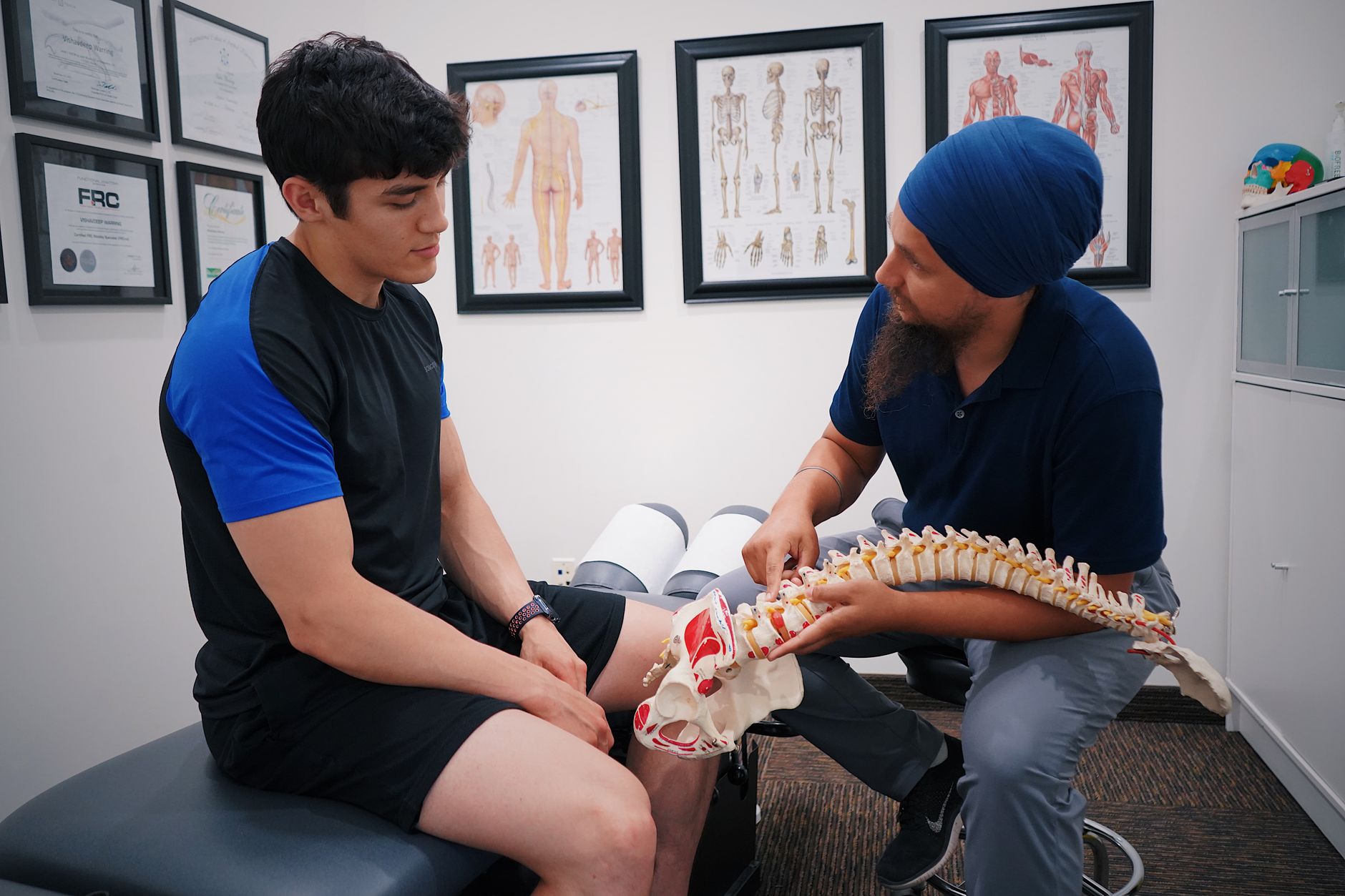
For lower back pain caused by joint restriction, nerve irritation, or spinal misalignment, a chiropractor is typically the faster first stop. Physical therapists excel when the goal is rebuilding strength, retraining movement patterns, or recovering from surgery. Many patients benefit from both, but knowing which to see first can save weeks of misdirected treatment.
What Does a Chiropractor Actually Do for Lower Back Pain?
A chiropractor's primary tool is spinal manipulation, which is a controlled, hands-on force applied to a restricted vertebral joint to restore motion and reduce pain signals. When a joint in your lumbar spine loses its normal range of motion, surrounding muscles guard and tighten, nerves become irritated, and pain intensifies. Manipulation releases that restriction, often producing immediate relief.
A typical chiropractic visit runs 30 to 45 minutes. The first visit includes a full orthopedic exam, a review of any existing imaging, and hands-on treatment before you leave.
Modern sport-and-spine chiropractors also integrate tools like dry needling for lower back pain and shockwave therapy alongside adjustments, covering ground that once required separate referrals. This matters because most lower back pain is not purely a joint problem or purely a soft tissue problem. It is usually both.
According to a 2017 JAMA Internal Medicine study, spinal manipulation produced statistically significant improvements in both pain and function for patients with acute low back pain, making it a clinically supported first-line option.
What Conditions Respond Best to Chiropractic Care?
Chiropractic care consistently produces strong outcomes for the following conditions:
- Facet syndrome: Irritation or inflammation of the small joints (facets) on the back of each vertebra that guide spinal movement
- Lumbar disc bulge: A disc that has shifted outward and may be pressing on a nearby nerve root
- Sciatica: Radiating pain, numbness, or tingling that travels from the lower back down the leg along the sciatic nerve; learn more in our guide to chiropractic care for sciatica in Salt Lake City
- Sacroiliac (SI) joint dysfunction: Abnormal movement or inflammation at the joint connecting the sacrum to the pelvis, often producing one-sided low back or buttock pain
- Acute muscle spasm with a joint component: Sudden, involuntary muscle tightening that is driven by an underlying joint restriction rather than muscle strain alone
What Does a Physical Therapist Do for Lower Back Pain?
Physical therapy is a licensed healthcare discipline that uses exercise, manual therapy, and movement coaching to restore function. Where chiropractic care targets the joint, physical therapy targets what surrounds it: the muscles, movement patterns, and neuromuscular habits that either protect or stress the spine.
A typical PT visit includes an initial evaluation, the design of a personalized exercise program, and the use of modalities such as ultrasound or TENS (transcutaneous electrical nerve stimulation, a low-voltage electrical current used to reduce pain signals). Visits generally run 45 to 60 minutes.
According to a 2018 Annals of Internal Medicine study, supervised exercise therapy produced meaningful long-term improvements in patients with chronic low back pain, particularly when combined with education and behavioral coaching.
What Conditions Respond Best to Physical Therapy?
Physical therapy is the stronger choice for the following situations:
- Post-surgical rehab: Structured movement restoration after procedures like a discectomy or spinal fusion, where loading the spine too aggressively too soon can cause harm
- Chronic low back weakness: Long-standing pain driven by poor core stability rather than acute joint restriction
- Spondylolisthesis with instability: A condition in which one vertebra slips forward over the one below it, requiring muscular support rather than joint mobilization
- Hip muscle imbalance: Weakness or tightness in the glutes, hip flexors, or lateral hip stabilizers that transfers stress to the lumbar spine
- Generalized deconditioning: A broad decline in physical fitness that makes the body unable to support normal spinal loads
Chiropractor vs. Physical Therapist: Side-by-Side Comparison
The table below summarizes the core differences so you can match your situation to the right provider quickly.
| Factor | Chiropractor | Physical Therapist |
|---|---|---|
| Primary tool | Spinal and joint manipulation | Exercise and movement retraining |
| Best for | Joint restriction, nerve irritation, acute pain | Weakness, instability, post-surgical recovery |
| Typical first visit | Assessment plus hands-on treatment same day | Assessment plus exercise program design |
| Number of visits (typical) | 6-12 for acute cases | 12-24 for rehab cases |
| Can prescribe exercise? | Yes | Yes (primary focus) |
| Uses dry needling? | Often, especially at sport and spine clinics | Sometimes |
| Uses shockwave therapy? | Yes, at sport and spine clinics | Rarely |
| Insurance coverage in Utah | Commonly covered | Commonly covered |
Visit counts are averages for straightforward presentations. Complex or chronic cases on either track can exceed these ranges. Your provider should give you a clear care plan with measurable milestones after your first or second visit, not an open-ended schedule.
For current pricing details, see our breakdown of chiropractic cost in Salt Lake City without insurance.
Should I See a Chiropractor or Physical Therapist First?
The right starting point depends on your symptom type, symptom duration, and whether you have a surgical history.
See a chiropractor first if:
- Pain came on suddenly, within the past 1 to 6 weeks
- Pain is sharp, localized to one side, or radiates down the leg (possible sciatica)
- You feel stiff and "locked up" in the morning and loosen as the day progresses
- Previous imaging has shown a disc bulge or facet degeneration
- You want hands-on treatment at the very first visit rather than a home exercise program
See a physical therapist first if:
- You are recovering from spinal surgery and your surgeon has cleared you for rehab
- Pain is chronic, meaning it has lasted more than 3 months, and is linked to known core weakness
- Your primary care physician has specifically referred you to PT
- Your pain is diffuse, postural, and consistently worsens with prolonged sitting
Neither list is a medical diagnosis. If you are unsure, the fastest path is to book an evaluation with a sport-and-spine chiropractor who can assess your spine directly and refer you to PT if that is the better fit.
Can You See Both at the Same Time?
Yes. Co-management is common and often produces better outcomes than either discipline alone. Chiropractors restore joint mobility, and physical therapists build the muscular support around that restored mobility. Some sport-and-spine clinics coordinate both approaches in-house, reducing the communication lag that can occur between separate practices.
How Does a Sport-and-Spine Chiropractor Differ From a General Chiropractor?
A sport-and-spine chiropractor blends spinal manipulation with soft tissue therapies, closing much of the gap between chiropractic and physical therapy. This model is particularly effective when lower back pain has both a joint restriction component and a soft tissue component, which is more often the rule than the exception.
Two tools that define this model are dry needling and shockwave therapy.
Dry needling is the insertion of a thin filiform needle into a myofascial trigger point (a hypersensitive knot within a muscle) to release tension and reduce referred pain. It is distinct from acupuncture in both mechanism and training framework. For lower back pain, it targets the paraspinal muscles, gluteus medius, and piriformis that commonly guard a restricted lumbar joint.
Shockwave therapy is a non-invasive treatment that delivers acoustic energy pulses to injured or chronically inflamed tissue to stimulate healing and break down scar tissue. It is especially useful for cases where lower back pain has persisted long enough for fibrotic tissue to form, and for tendinopathies at the hip or pelvis that contribute to lumbar loading problems. You can compare options in our guide to shockwave therapy cost per session in Salt Lake City.
Together, these tools allow a sport-and-spine provider to address the full picture of lower back pain without requiring multiple referrals across different offices.
What Should You Expect at Your First Chiropractic Visit for Lower Back Pain?
First-time patients often delay care because they do not know what to expect. Here is the standard sequence at a sport-and-spine chiropractic clinic:
- Health history and intake form (10 to 15 minutes): You describe your pain location, onset, aggravating factors, and any prior treatments or imaging.
- Orthopedic and neurological exam: The chiropractor tests your range of motion, reflexes, and performs leg raise tests to assess nerve involvement.
- Review of existing imaging: If you have X-rays or an MRI, the chiropractor reviews them to inform the working diagnosis.
- Plain-language diagnosis: You receive a clear explanation of what is driving your pain, using terms you can understand and act on.
- Hands-on treatment at the first visit: Depending on the findings, this may include spinal adjustment, soft tissue work, or dry needling.
- A clear care plan: You leave with a specific number of recommended visits, defined goals, and a timeline, not an open invitation to return indefinitely.
One important note: if a chiropractor identifies a condition outside chiropractic scope, such as a fracture, infection, or tumor, they will refer you immediately to the appropriate specialist. Chiropractors are trained in differential diagnosis and take that responsibility seriously. If you are wondering whether the adjustment itself carries risk, our article on whether getting your back cracked is safe covers that question directly.
Frequently Asked Questions
Is chiropractic or physical therapy better for a herniated disc?
Chiropractic care is often the first-line choice for a herniated disc causing acute pain or nerve symptoms, as spinal manipulation and traction techniques can reduce disc pressure and relieve nerve irritation. Physical therapy may follow to stabilize the spine through targeted core strengthening once the acute phase has passed. A 2010 Spine Journal study found that spinal manipulative therapy produced outcomes comparable to medical care for disc-related leg pain.
How many chiropractic visits does it take to fix lower back pain?
Most acute lower back pain cases show significant improvement within 6 to 12 chiropractic visits, according to standard clinical guidelines. Chronic or structurally complex cases may require a longer course. Your chiropractor should provide a care plan with measurable goals after the first or second visit, so you are not guessing about progress.
Can a chiropractor do what a physical therapist does?
A chiropractor and a physical therapist overlap in some areas, particularly manual therapy and exercise prescription, but their primary training and tools differ. Chiropractors specialize in joint manipulation and spinal assessment; physical therapists specialize in rehabilitation exercise and movement retraining. Sport-and-spine chiropractors bridge more of that gap by adding dry needling, shockwave therapy, and corrective exercise to the standard chiropractic toolkit.
Do I need a referral to see a chiropractor in Utah?
No. Utah is a direct-access state, meaning you can schedule a chiropractic appointment without a physician referral. Insurance coverage varies by plan, but access is not gated by a referral requirement. For specifics on what your plan covers, see our guide on insurance coverage for chiropractic in Utah.
What if my lower back pain does not improve with chiropractic or PT?
If lower back pain does not respond to conservative care within 4 to 6 weeks, your provider should order diagnostic imaging or refer you to a spine specialist. Conditions such as spinal stenosis, stress fracture, or, in rare cases, a spinal tumor require a different clinical pathway that conservative care cannot address on its own.
Lower back pain rarely resolves by waiting it out, and choosing the wrong provider for your specific problem adds weeks of unnecessary suffering. Whether your pain is sharp and sudden or dull and chronic, the best lower back pain treatments in Salt Lake City all share one thing in common: they start with an accurate assessment of what is actually driving your symptoms. If your picture fits the chiropractic profile, the most efficient next step is a same-day evaluation at Elevated Sport and Spine.
Frequently asked questions
The choice depends on your symptoms and their duration. See a chiropractor first if your pain came on suddenly, feels sharp or radiates down your leg, or if you feel stiff and locked up. See a physical therapist first if you're recovering from surgery, have chronic pain linked to core weakness, or your pain is diffuse and postural. Many patients benefit from seeing both providers together.

Dr. Taylor Wolf
Owner & Chiropractor, Elevated Sport and Spine
TPI Certified (Level 1 + Medical Level 2), PRI trained, dry needling certified. One-hour, one-on-one sports chiropractic in Salt Lake City. About Dr. Wolf →