Skiing
How to Prepare Your Knees for Ski Season: 6 Exercises That Work
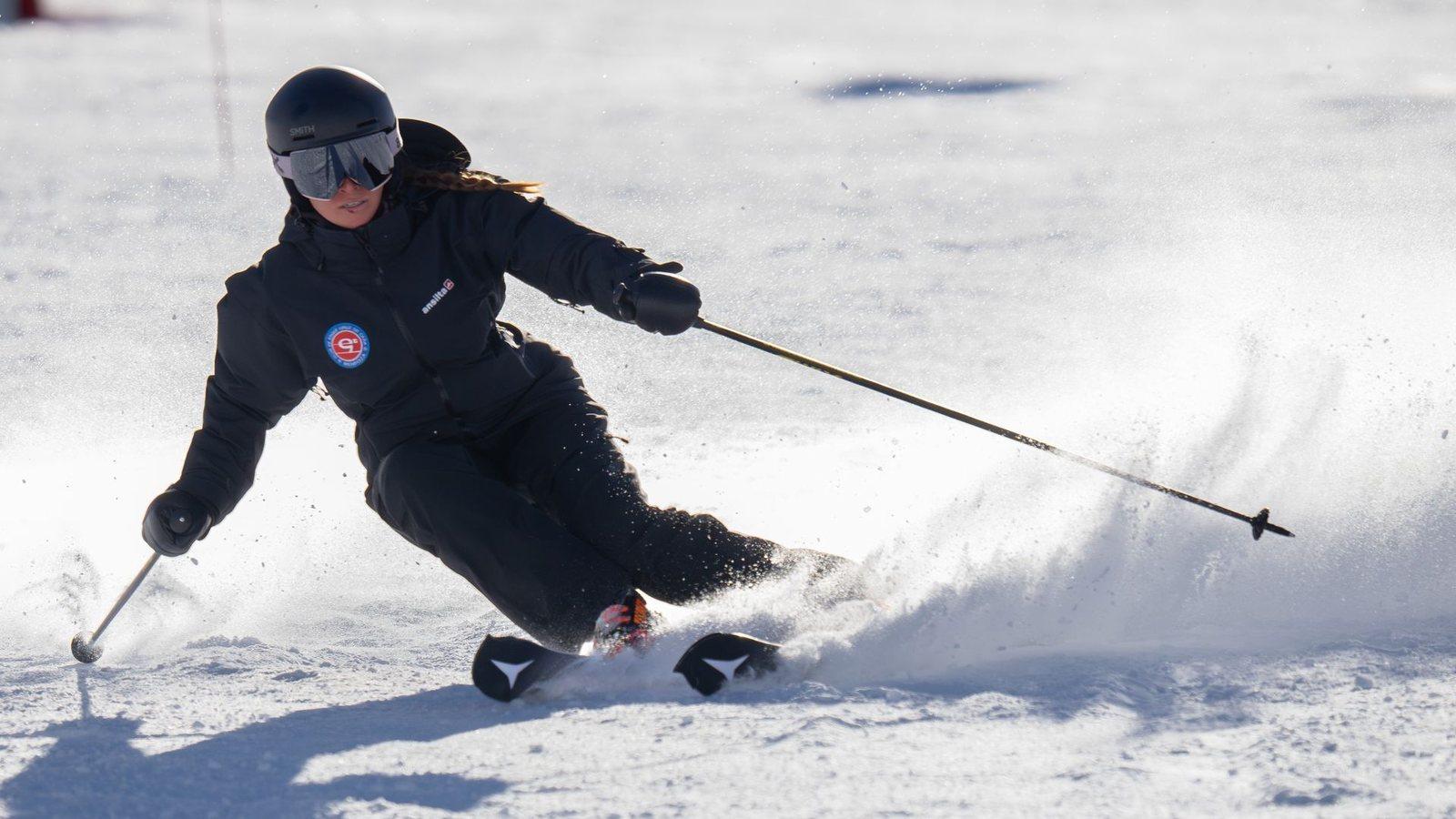
If you ski in Utah, your knees do more work than any other joint in your body. A 2018 clinical review in Sports Health found the knee is the most common site of injury in alpine skiing, at 27% to 41% of all ski injuries. That covers everything from a nagging ache by lunch to a torn ACL.
The good news is that most of what puts knees at risk is trainable. Skiing doesn't demand a special kind of fitness so much as a specific one: quads that can absorb force for hours, hips that keep the knee lined up, and legs that are close to equally strong. Here's how to prepare your knees for ski season, whether opening day is two months out or the lifts are already spinning.
Why do knees hurt after skiing?
Skiing loads your quads in an unusual way. Instead of pushing you up, like climbing stairs, they spend most of every turn controlling how fast you sink down. That's eccentric work, and it's the kind most people never train. When the quads can't keep absorbing that force, the knee joint and the tendon below the kneecap pick up the slack.
The most common reasons we see for knee pain after skiing:
- Quad fatigue. Your legs were ready for two hours of skiing and you asked for six.
- Skiing in the backseat. Leaning back puts the quads and the front of the knee under constant strain.
- Kneecap irritation (patellofemoral pain), usually felt as an ache around or behind the kneecap on descents and stairs.
- Patellar tendon irritation, felt just below the kneecap, from a sudden jump in load after a summer off.
- A weaker leg. If one side does more of the work all day, that knee is the one that complains.
Why most ski injuries happen late in the day
Ski patrollers have known this for years. University of Utah Health sports medicine physician Dr. Travis Maak, the head orthopedic team physician for the Utah Jazz, puts the injury window at roughly 3:30 to 5:00 in the afternoon. His explanation is muscle fatigue. As the muscles tire, they stop firing well, and the load moves down the chain to the ligaments. Snow conditions don't help: by late afternoon the runs are skied out and firmer.
That changes how you should train. Being strong enough for one hard run isn't the goal. You need legs that are still controlling your knees on run twenty-five. Endurance in a ski stance matters as much as max strength, which is why the plan below includes both.
When should you start preparing for ski season?
Six to eight weeks before your first day is the sweet spot. That's enough time for real strength gains, which take several weeks to build, plus a few weeks to convert them into endurance and control. Train three days a week, with at least a day off between sessions.
Already skiing? Start anyway. Drop to two sessions a week, keep them away from your biggest ski days, and you'll still feel the difference by mid-season.
6 exercises to prepare your knees for skiing
These six cover what skiing actually asks of your knees: controlled lowering, endurance in a bent-knee stance, single-leg strength, hamstring support for the ACL, landing control, and balance. Keep the knee tracking over your second toe on every rep, and never push through sharp pain.
- Slow-lowering goblet squat. Hold a weight at your chest and take three to four seconds to lower, then stand up normally. 3 sets of 8. This trains the exact eccentric control skiing demands.
- Wall sit. Back flat against a wall, knees bent to about 90 degrees. Build from 30 seconds to 60 to 90 seconds, 3 rounds. It's the closest thing to a ski stance you can do at home.
- Rear-foot elevated split squat. Back foot on a bench, lower straight down on the front leg. 3 sets of 8 per leg. Single-leg work exposes and fixes the weaker side.
- Single-leg Romanian deadlift. Hinge at the hip on one leg, reaching the opposite hand toward the floor. 3 sets of 8 per leg. Strong hamstrings help keep the shin from sliding forward, which protects the ACL.
- Lateral skater hop with a stick landing. Hop side to side, landing softly on one leg and holding for two seconds. 3 sets of 6 per side. This builds the landing control you need when terrain gets choppy.
- Single-leg balance. Stand on one leg for 30 seconds, then progress to eyes closed or an unstable surface. 3 rounds per leg. Balance is what saves you when an edge catches.
Progress by adding weight, time, or difficulty every week or two. By week six you should be able to hold a 90-second wall sit and do every single-leg exercise with clean form on both sides.
Test both legs, not just how strong you feel
Most skiers have one leg that's noticeably weaker than the other, and almost none of them can feel it. You compensate without thinking, so the gap stays hidden until that knee starts aching on the last runs of the day.
In sports medicine, a common benchmark when clearing an athlete to return from a knee injury is having the injured leg reach at least 90% of the strength of the healthy one. It's a useful standard for any skier. At Elevated Sport and Spine, we measure it directly: VALD strength testing compares your legs side by side, and Runeasi shows how each knee absorbs impact when you land. Seeing the actual numbers tells you which leg needs the extra work, so your training isn't guesswork.
How to protect your knees on the mountain
Training does most of the work. These habits do the rest:
- Warm up before the first chair: leg swings, bodyweight squats, and a few lunges in the parking lot.
- Stay forward. Shins pressing into the front of your boots keeps the load off your knees and on your legs.
- Take your last run before you're tired, not after. If your legs are burning, call it.
- Don't save the hardest terrain for after lunch, when fatigue and skied-out snow stack up.
- Have a ski shop set your bindings for your height, weight, and ability, and recheck them every season.
- If you fall backward, don't fight it. Trying to stand up while off balance to the rear, with your hips below your knees, is a classic ACL injury position. Keep your arms forward, sit down, and wait until you've stopped.
When to get your knee checked
Some soreness in your thighs after a big day is normal. Pain in the knee itself is different. See someone if you notice any of these:
- A pop at the moment of injury, followed by swelling within a few hours
- The knee giving way or feeling unstable
- Locking, catching, or being unable to fully straighten the knee
- Pain that comes back every ski day, or keeps getting worse
The first three can point to a ligament or meniscus injury and should be looked at quickly, often with imaging. The last one is the kind of problem we see all winter: a knee that isn't injured so much as overloaded. Our team includes a former ski instructor, and every visit is one-on-one for a full hour. We test your strength and impact side by side, treat what's irritated, and build a plan to keep you skiing full days through spring.
Frequently asked questions
Plan on six to eight weeks of training, three days a week. Strength takes several weeks to build, and the last few weeks turn it into the endurance and control you need for full ski days. If the season has already started, two sessions a week still helps.
Sources

Dr. Taylor Wolf
Owner & Chiropractor, Elevated Sport and Spine
TPI Certified (Level 1 + Medical Level 2), PRI trained, dry needling certified. One-hour, one-on-one sports chiropractic in Salt Lake City. About Dr. Wolf →