Sports Chiropractic
Why Active Adults Choose a Sports Chiropractor
There's a conversation active adults know by heart. You describe the knee that aches on trail runs, or the shoulder that complains in the pool, and the well-meaning provider delivers the verdict: maybe take a break from that. Rest it. You're not twenty-five anymore.
It's advice that manages the symptom by deleting the life. And it's the single biggest reason active adults end up in a sports-focused practice like ours: they're not looking for permission to stop. They're looking for a plan to continue.
The cycle sports chiropractic exists to break
The standard loop goes like this: something hurts, you rest it, it feels better, you return to your sport, it flares again, usually faster than last time. Rinse, repeat, gradually shrink your life to fit the injury.
The loop persists because rest treats pain, not cause. The hip that can't rotate, the calf that lost its spring, the shoulder blade that forgot its rhythm, rest changes none of it. You return to sport with the same faulty mechanics plus a few weeks of deconditioning. Of course it flares.
Sports chiropractic starts from the opposite premise: the goal is restored capacity, not just quieted symptoms. Success isn't "it doesn't hurt when I do nothing". It's "it holds up when I do everything."
What's actually different
Concretely, a sports-focused practice differs from the standard model in four ways:
- Assessment against your sport's demands: a skier's turn, a golfer's rotation, a runner's stride each stress the body differently; the exam starts from what your body must do, not from a generic checklist
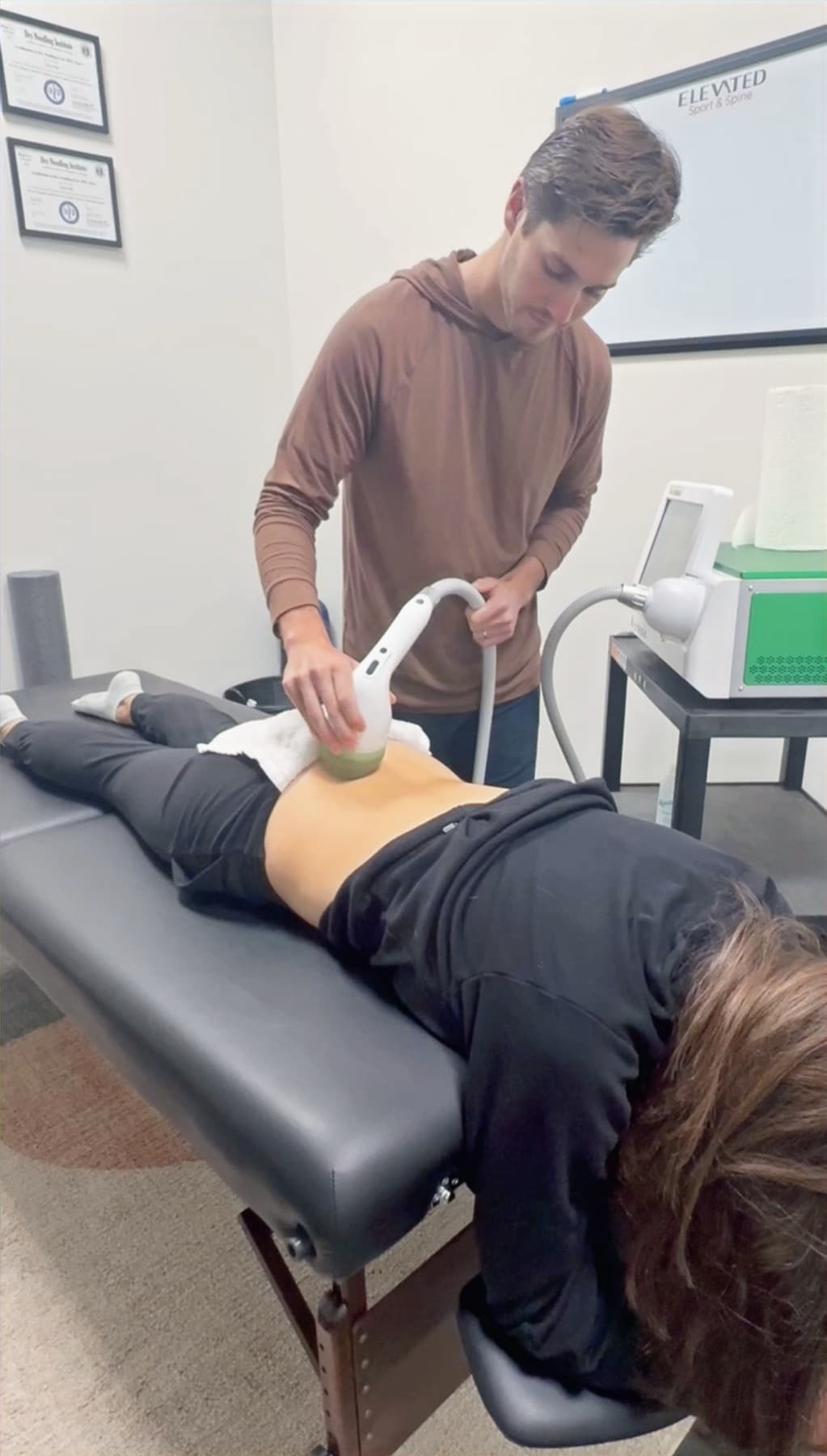
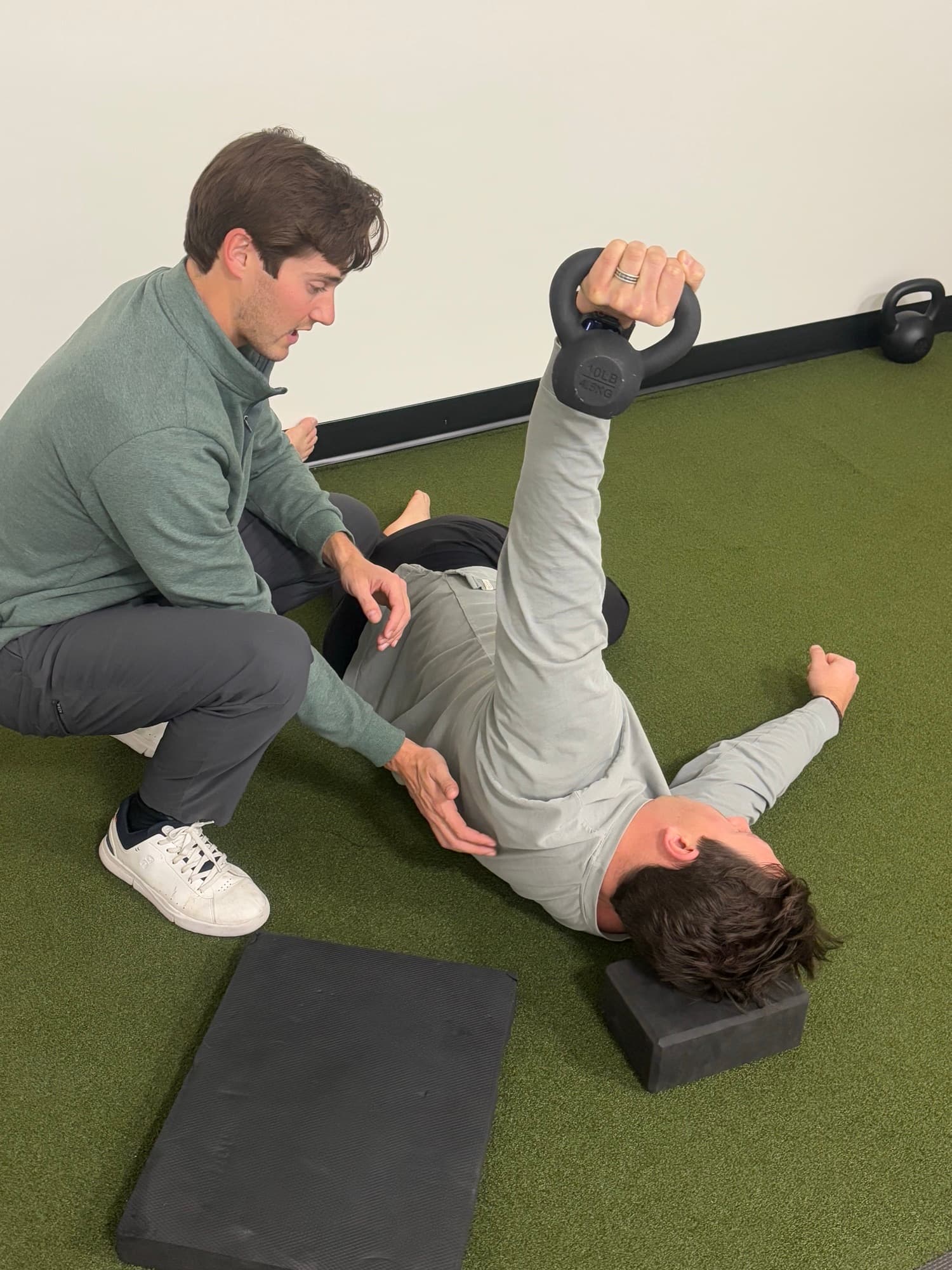
- Treatment as a means, not the product: adjustments, dry needling, and shockwave create windows of better motion and calmer tissue; the plan then fills those windows with rebuilt strength and patterns
- Load management instead of rest prescriptions: you keep training, modified intelligently, because deconditioning is the enemy of every rehab timeline
- A defined end: plans are built to finish, with capacity benchmarks that tell both of us when you're genuinely ready, not visit counts that run until you stop showing up
Why it matters more as you age
Here's the counterintuitive part: this approach matters more at fifty-five than at twenty-five. Young bodies get away with mediocre care, tissue capacity is high and healing is fast. As you age, margins shrink: restrictions accumulate faster, deconditioning happens quicker, and "just rest it" costs more each time.
The research is unambiguous that continuing to train, with intelligent modification, beats resting for nearly every musculoskeletal condition active adults face. Muscle, tendon, and bone all remain trainable for life. What changes is the precision required, and precision is exactly what a rushed, volume-based care model can't offer.
That's the real reason our visits are an hour, one-on-one. Precision takes time: time to find the actual driver, time to treat it properly, and time to coach the rebuild instead of handing you a printout.
Who this is for
Our patients aren't professional athletes, mostly. They're skiers in their forties who refuse to miss a season, golfers in their sixties protecting a twice-a-week habit, trail runners, masters swimmers, pickleball converts, and parents who lift so they can keep up. What they share is an identity: being active isn't what they do, it's who they are, and any care plan that ignores that will be quietly abandoned by February.
If that's you, and you're somewhere in the pain-rest-flare-up loop right now, book a free discovery call. We'll tell you honestly what's driving the problem, what a plan looks like, and, the answer to the question you actually care about, what you can keep doing while we fix it. Usually: most of it.

Dr. Taylor Wolf
Owner & Chiropractor, Elevated Sport and Spine
TPI Certified (Level 1 + Medical Level 2), PRI trained, dry needling certified. One-hour, one-on-one sports chiropractic in Salt Lake City. About Dr. Wolf →