Golf
How to Prevent Low Back Pain While Golfing
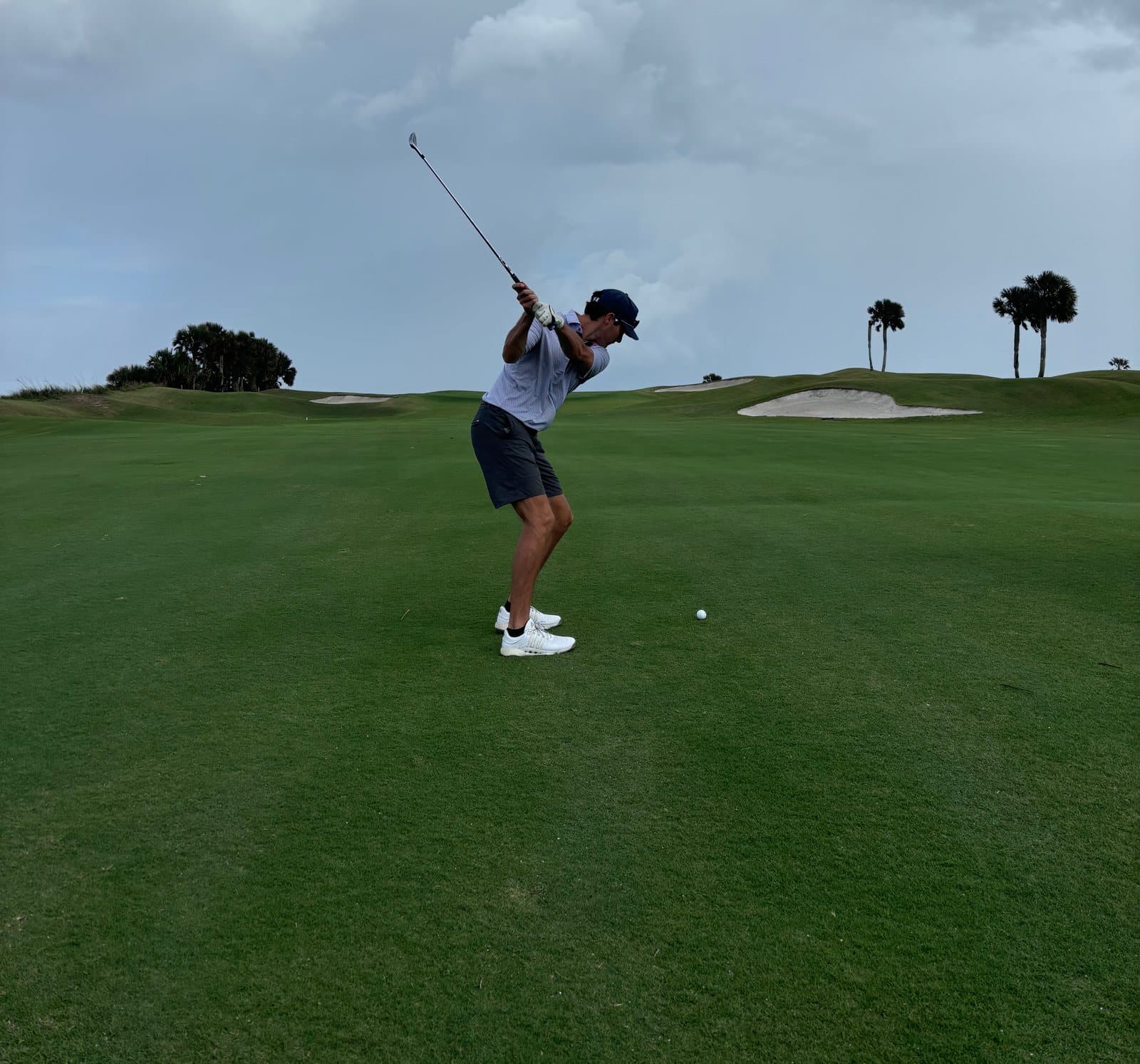
Low back pain ends more golf seasons than every other injury combined, and almost none of it arrives by surprise. It builds: a little stiffness after Saturday rounds in April, needing a cart by July, and shutting it down in August. The predictability is actually the good news, because a predictable injury is a preventable one.
Prevention comes down to one principle and three habits. The principle: your lumbar spine is built for stability, and it gets injured when it's forced to produce rotation that should come from your hips and mid-back. Every habit below serves that principle.
Habit 1: Maintain the rotation your swing spends
The swing needs roughly 45 degrees of hip internal rotation and meaningful thoracic rotation to happen safely. Desk life takes both, a few degrees a year, and your swing quietly re-routes the missing motion through your low back.
The maintenance dose is smaller than most golfers expect: ten minutes, three times a week, targeted correctly:
- 90/90 hip switches: sit tall, both legs at 90 degrees, rotate knees side to side. The single best self-audit and maintenance drill for hip rotation.
- Open books: side-lying, knees stacked, rotate the top arm and rib cage open. Feeds the thoracic rotation your shoulder turn depends on.
- Deep squat holds with rotation: 30 seconds at the bottom, reaching one arm to the sky. Hips, ankles, and mid-back in one drill.
- If any of these feels dramatically different side to side, that asymmetry is your early-warning system, and worth a professional look before it becomes a pain pattern.
Habit 2: Warm up like the swing is athletic (because it is)
You're about to take your spine from a car seat to maximal rotational velocity. Two practice swings is not a transition plan, and the first-tee back tweak is a cliché for a reason. The fix costs six minutes in the parking lot or by the range:
One minute of brisk walking or air squats to raise temperature. Two minutes of the mobility drills above, hips and thorax specifically. Two minutes of progressive swings: wedge at 50%, then 70%, then a few full-speed drivers. One minute of hip hinges to wake up the glutes, which are the muscles that protect your back at impact.
That's it. Six minutes, and the difference in how the first three holes feel is usually enough to make the habit self-sustaining.
Habit 3: Manage the dose
Tendon and joint tissue adapts to load gradually, enthusiasm doesn't. The back-pain spikes we see cluster around dose jumps: the first week of the season, golf-trip weeks (36 a day for four days), and new-lesson phases when someone rebuilds their swing and hits 200 range balls a day.
You don't have to play less, just ramp honestly. Early season, space rounds with a rest day. On golf trips, book a morning mobility slot the way you book tee times. During swing changes, cap range sessions and finish with the drills from Habit 1. And walk when you can: cart golf's sit-swing-sit cycle is quietly brutal on a stiff back.
The strength piece nobody wants to hear
Mobility protects the back by giving rotation somewhere better to live; strength protects it by controlling that rotation at speed. The minimum effective menu is short: a hinge pattern (deadlift variation), a single-leg pattern (split squat), an anti-rotation core drill (Pallof press), and loaded carries. Two sessions a week, forty-five minutes total, and your back enters every round with a margin of safety instead of a deficit.
Golfers over fifty get the most from this: power loss with age is mostly fast-twitch and control, and both respond to training at any age.
When prevention needs help
If your back already talks after every round, prevention advice alone is behind the curve. There's a restriction or pattern that needs finding first. That's a one-hour job here: TPI screen to locate the leak, hands-on care to restore what's stuck, and a personalized version of everything above so it doesn't return.
The golfers who play pain-free into their seventies aren't lucky. They're maintained. Book a free discovery call before the season, your August self will thank you.

Dr. Taylor Wolf
Owner & Chiropractor, Elevated Sport and Spine
TPI Certified (Level 1 + Medical Level 2), PRI trained, dry needling certified. One-hour, one-on-one sports chiropractic in Salt Lake City. About Dr. Wolf →