Pickleball
Pickleball Injuries We See Every Week
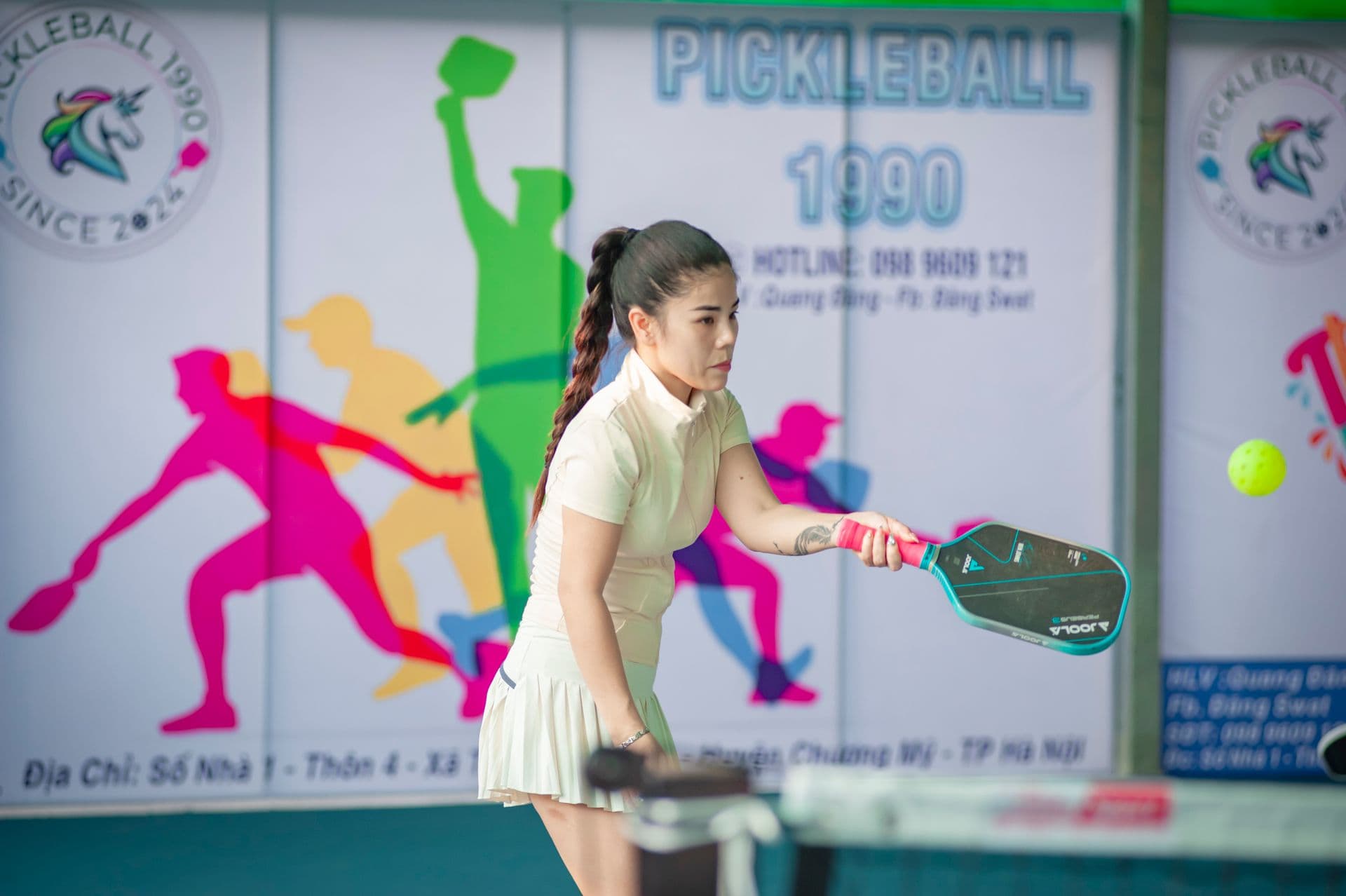
Pickleball did something no fitness campaign ever managed: it convinced millions of adults to sprint, lunge, and smash again. That's a genuine public-health victory, and an orthopedic reckoning. The sport looks gentle from the sidelines: small court, light paddle, friendly vibes. Then you actually play, and discover it's a game of explosive first steps, rapid direction changes, and overhead smashes, played on unforgiving hard courts, often by bodies that haven't produced explosive anything in fifteen years.
The injury list this produces is remarkably consistent. Here's what shows up at Elevated Sport and Spine every single week, and what each injury is actually telling you.
1. Pickleball elbow
The number-one complaint, by a wide margin. Usually it's the tennis-elbow pattern, pain on the outer elbow that flares with gripping and backhands, but pickleball's wristy dinks and speed-ups hit the inner elbow (the golfer's-elbow pattern) more often than tennis does.
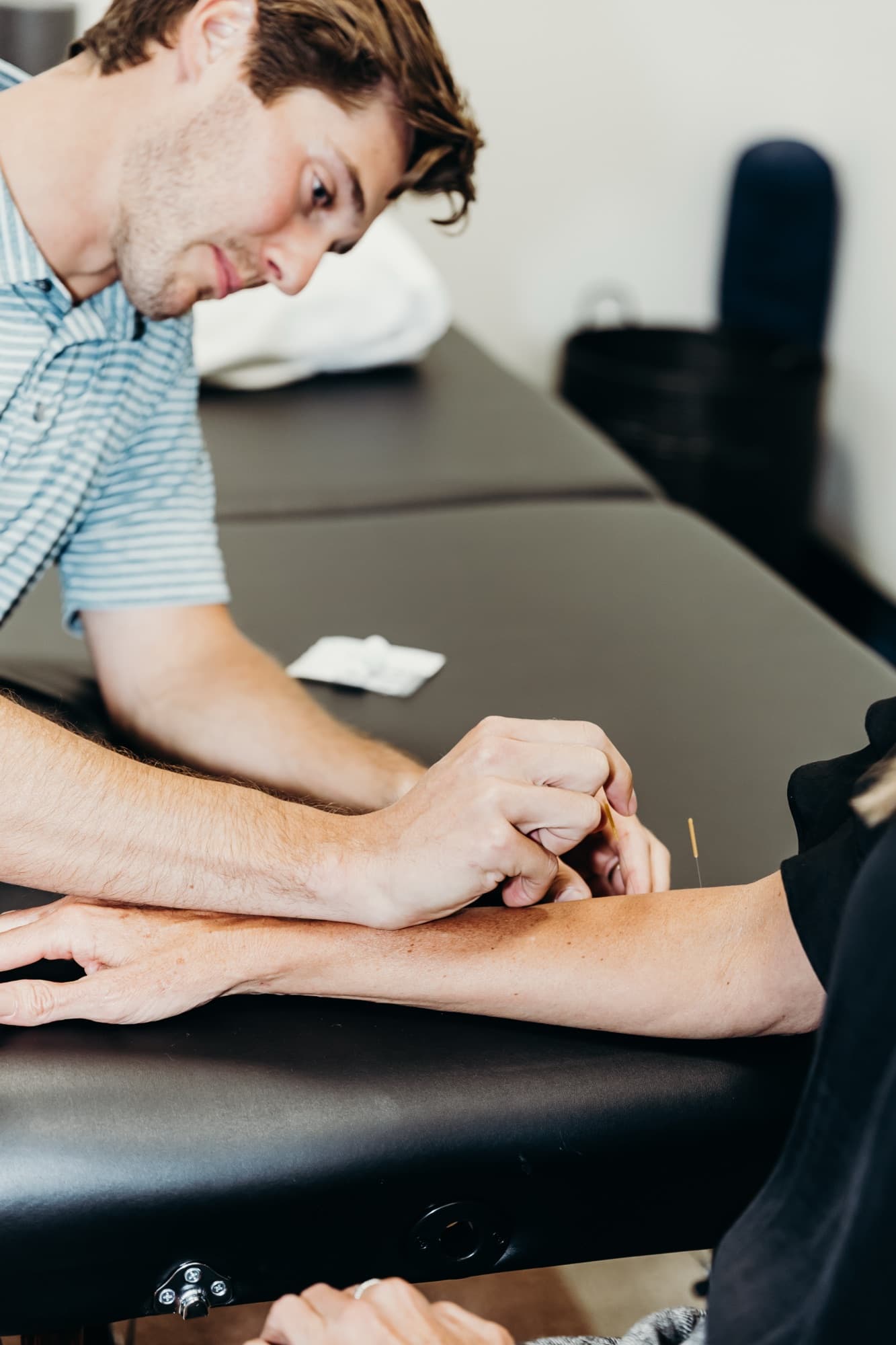
The driver is load without preparation: rally frequency in pickleball is enormous, points are short and fast, and the forearm muscles absorb thousands of micro-impacts per session. Tendons strengthen slower than enthusiasm grows. By the time it hurts holding a coffee cup, the tendon is genuinely degenerated: which is why rest alone reliably fails and why dry needling, shockwave therapy, and a grip-strength progression are our standard combination. Most players keep playing during care, with sensible session caps.
2. Calf strains and achilles trouble
The infamous first-step injury. That explosive push toward the kitchen line demands more from the calf than anything most adults have done in years, and it's frequently the moment a calf fiber gives (the classic "someone hit me in the leg with a ball" sensation) or an achilles begins its slow complaint.
Acute strains need proper early management and a graded return, not two weeks of rest followed by a full-speed league night, which is the canonical re-injury recipe. Chronic achilles pain is textbook shockwave-plus-loading territory. Either way, the long-term fix is calf capacity: the single best predictor of whether this happens again.
3. Rotator cuff and shoulder pain
Overheads and serves put the shoulder in its most demanding position: high, loaded, and fast. Players who came from tennis usually have some tolerance built; players who came from cycling, running, or the couch often don't. The result is cuff irritation that aches at night and pinches on every smash.
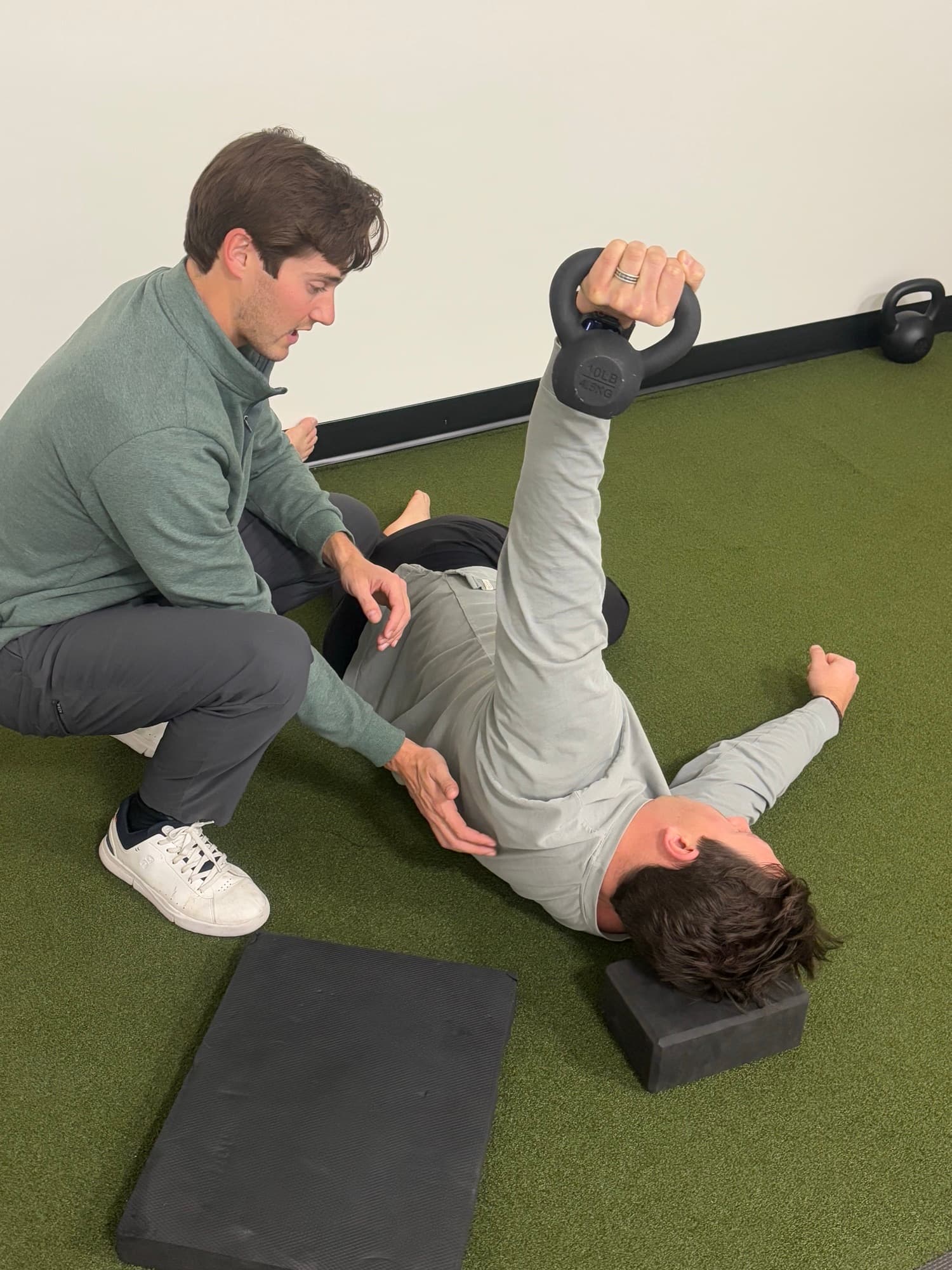
The underrated accomplice is the mid-back: thoracic spines stiffened by desk years force the shoulder to hyper-reach on every overhead. We treat the cuff directly, needling, targeted loading, but restoring thoracic rotation is usually what makes the fix hold.
4. Knee pain
Hard courts, constant stop-and-go, and lunging for dinks add up to two familiar patterns: patellofemoral pain (ache around the kneecap on stairs and squats after play) and patellar tendinopathy (sharp pain below the kneecap on push-off).
Both usually trace to hips that aren't steering: when the lateral hip stabilizers fatigue, the knee drifts inward on every lunge and the kneecap tracks badly. Hip control work fixes more pickleball knees than any knee-specific treatment, though we'll settle the irritated tissue directly while the control gets built.
5. Low back flare-ups
The kitchen line is a masterclass in sustained hip-hinge posture, bent, ready, reaching, and players hold it for hours. Backs that lack hip mobility borrow the difference, and the next morning tells the story.
As covered throughout this site: the back is usually the victim, the hips the culprit. Restore hip motion, teach a real hinge, and the Sunday-morning stiffness after Saturday league mostly disappears.
How to stay on the court
Three habits prevent the majority of what's above: ramp up gradually when you start (or restart) the sport: your enthusiasm is six weeks ahead of your tendons; build the base the sport assumes (calf capacity, hip control, grip strength: 15 focused minutes twice a week covers it); and treat lingering pain early, because a tendon that's hurt for three weeks fixes fast, while one that's hurt for a year has literally changed structure.
If something's already barking, don't wait for the offseason, there isn't one in pickleball. Book a free discovery call, tell us what's hurting, and we'll build a plan that keeps you in the game while we fix it.

Dr. Taylor Wolf
Owner & Chiropractor, Elevated Sport and Spine
TPI Certified (Level 1 + Medical Level 2), PRI trained, dry needling certified. One-hour, one-on-one sports chiropractic in Salt Lake City. About Dr. Wolf →