Sports Chiropractic
Tennis Elbow vs Golfer's Elbow: What's the Difference?
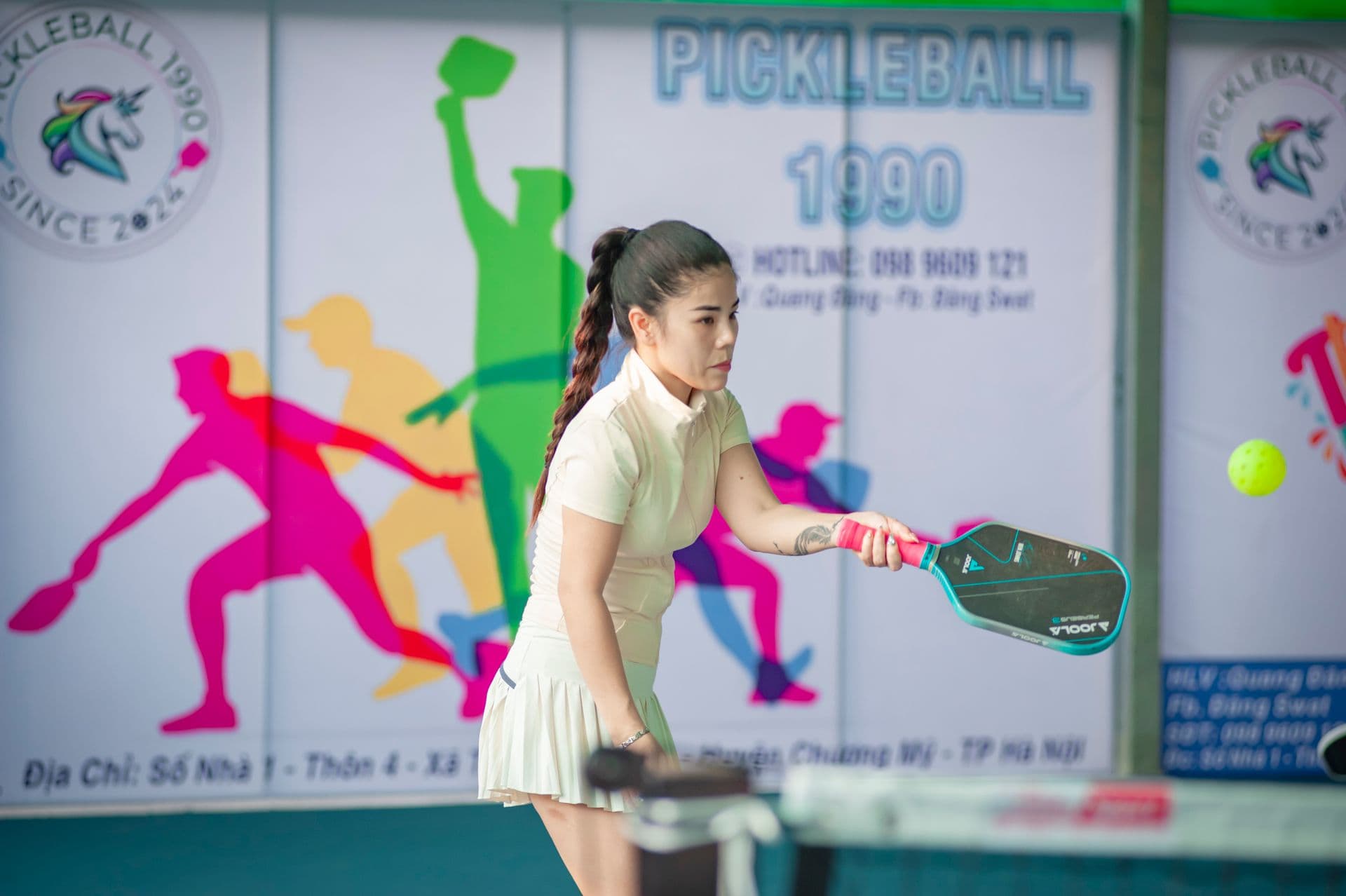
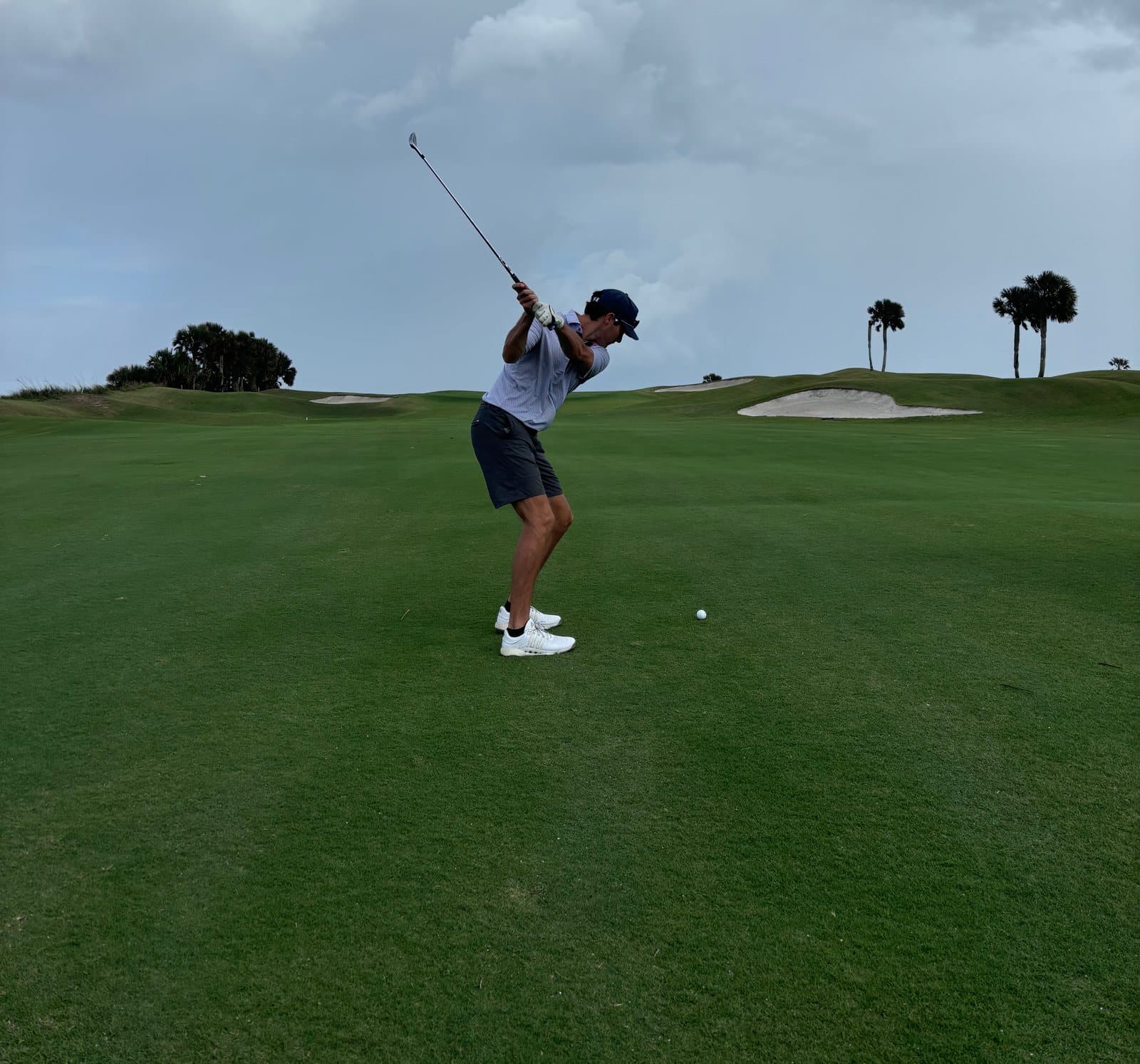
First, the naming is terrible. Most tennis elbow we treat belongs to pickleball players, golfers, and people who spent a weekend demoing a bathroom. Plenty of golfer's elbow shows up in climbers, lifters, and desk workers. The names describe historical stereotypes, not who actually gets them.
What the two conditions share: both are tendinopathies, overload injuries where a tendon's workload outran its capacity for long enough that the tissue began to degenerate. What separates them is geography, and the ten-second test below.
The ten-second test
Hold your arm out, palm up. Now find your pain:
- Outer (thumb-side) bump of the elbow, flaring when you grip, lift a kettle, shake hands, or extend your wrist, tennis elbow (lateral epicondylopathy). The wrist extensors that anchor there are overworked.
- Inner (pinky-side) bump, flaring when you flex your wrist, grip hard, pull, or swing through impact, golfer's elbow (medial epicondylopathy). The wrist flexors and pronators anchor there.
- Confirmation: tennis elbow hurts when you make a fist and lift the back of your hand against resistance; golfer's elbow hurts curling your palm toward your forearm against resistance.
Why each one happens
Tennis elbow is a gripping-and-stabilizing injury. The wrist extensors' real job is holding your wrist steady while your hand grips: every backhand, every hammer swing, every hour of mousing keeps them under low-grade tension. When volume spikes (a new pickleball habit, a renovation project), the tendon's capacity gets outrun.
Golfer's elbow is a force-transfer injury. The flexor-pronator group channels power from the body into the hand at moments of impact: a golf swing striking the ball, a pull-up, a hard forehand. When the body's rotation stalls upstream, the forearm makes up the difference with a flip, and the medial tendon absorbs the bill.
That upstream detail matters more than most rehab acknowledges: elbow tendinopathies are frequently symptoms of a shoulder, thoracic spine, or hip that stopped rotating. Treat only the elbow and you've treated the receipt, not the purchase.
What actually fixes them
The playbook is similar for both sides, with different targets:
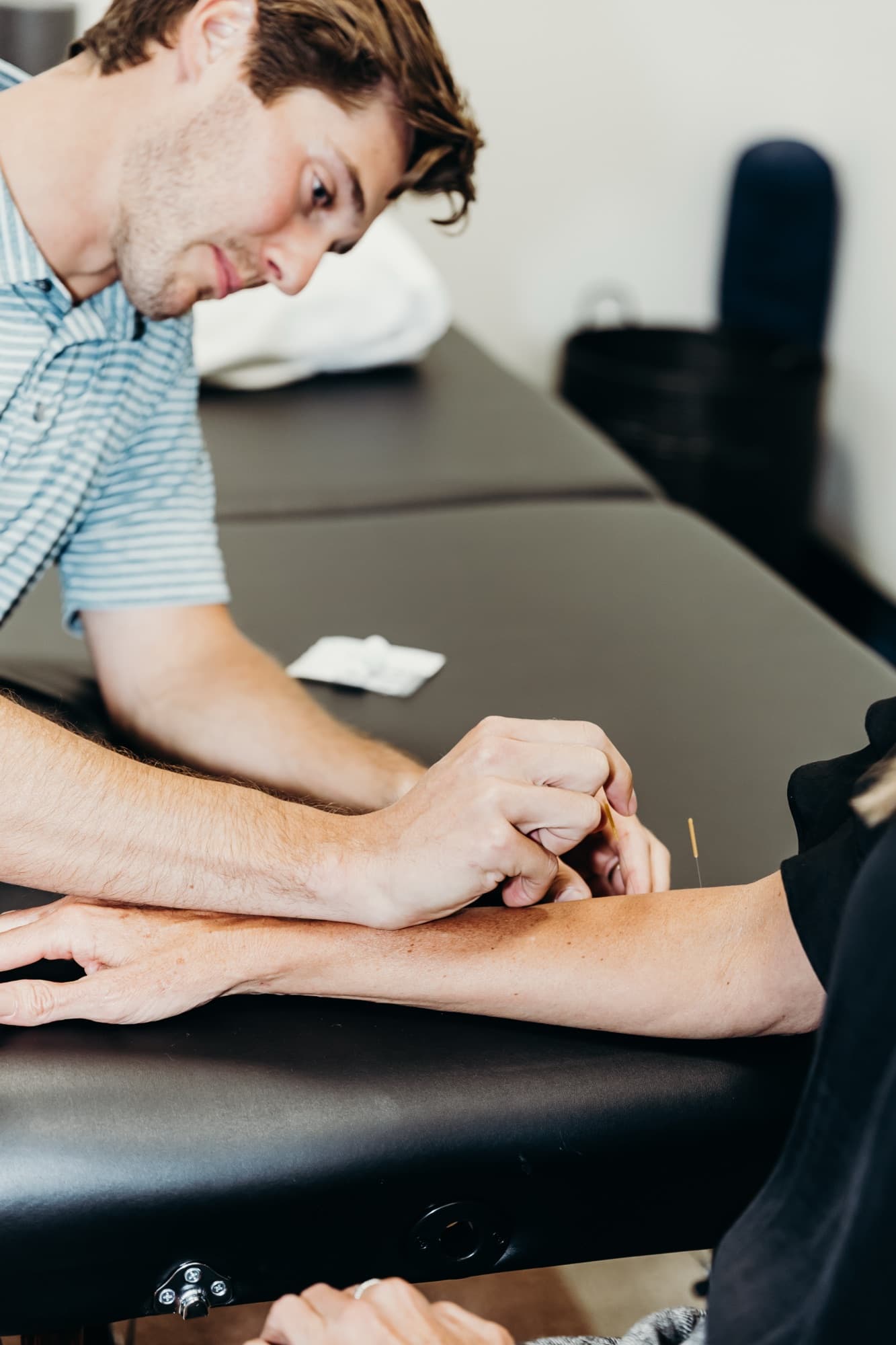
Settle the tissue, dry needling into the guarded forearm muscles reduces the protective tension that keeps the tendon irritated; shockwave therapy restarts healing in tendons that have gone properly chronic (hurting more than three months). Both earn their place here more reliably than almost anywhere else in the body.
Load it back to strength: tendons rebuild through progressive resistance, not rest. For tennis elbow that means graded wrist-extension and grip work; for golfer's elbow, wrist-flexion and pronation loading. Slow, heavy-ish, and boring, and it works.
Fix the upstream leak: the mechanical audit: shoulder and thoracic rotation for the golfer, grip habits and equipment for the racquet athlete. This is the difference between fixing this episode and fixing the pattern.
What doesn't work
Rest alone tops the list: the ache fades in week two, the deconditioned tendon re-flares in week five, and the cycle repeats until the tissue has degenerated enough to need months instead of weeks. Cortisone deserves special mention: it reliably kills the pain for a few weeks, and the research consistently shows worse long-term outcomes versus doing nothing at all. A numbed, weakened tendon that gets used at full intensity is a step backward wearing a lab coat.
Elbow straps and braces? Fine as a short-term comfort tool during play; useless as a plan.
The bottom line
Outer elbow, gripping pain: tennis elbow. Inner elbow, flexing and pulling pain: golfer's elbow. Both are load-capacity problems that respond to the same logic, settle, rebuild, fix the leak, and both fix dramatically faster in month one than in month twelve.
If your elbow has been talking to you, don't wait it into a chronic case. A free discovery call and one assessment will tell you which side, which stage, and exactly what the fix looks like.
Dr. Taylor Wolf
Owner & Chiropractor, Elevated Sport and Spine
TPI Certified (Level 1 + Medical Level 2), PRI trained, dry needling certified. One-hour, one-on-one sports chiropractic in Salt Lake City. About Dr. Wolf →